Types of therapy
Types of therapy
At Paracelsus Recovery, our holistic treatment model includes therapies that help to restore the mind-body connection. One such therapy is dance/movement therapy (DMT). The aim of DMT is to promote emotional, psychological, and physical well-being through movement and self-expression.
What is dance/movement therapy?
Dance/movement therapy, or DMT for short, is a psychotherapeutic approach that uses dance and movement to enhance emotional, physical, and psychological well-being through strengthening the mind-body connection. Rooted in the idea that body and mind are interconnected, DMT encourages self-expression and personal growth through guided movement. It is typically led by licensed dance/movement therapists who combine movement with psychological theories to help individuals explore their emotions and internal sensations, release tension, and develop a greater awareness of their body’s connection to their thoughts and feelings. This often involves expressive dance, guided movement, and improvisation that incorporates the use of rhythm, gesture, and posture. By using movement and nonverbal communication alongside talk therapy, dance/movement therapy enables individuals in recovery to communicate using a language that extends beyond words. This makes dance/movement therapy particularly beneficial for those who struggle with verbal expression.
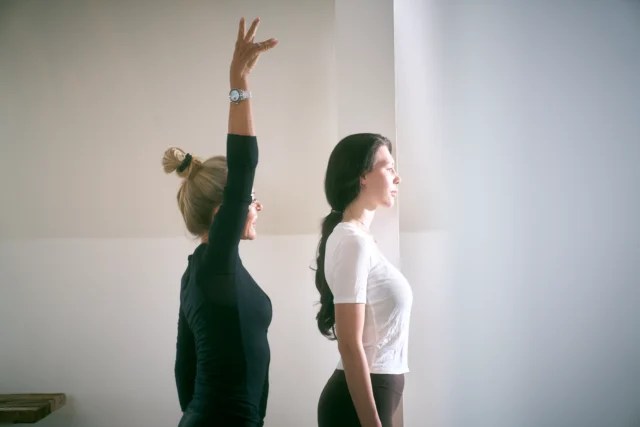
DMT sessions are tailored to each individual’s needs, taking into account their sense of connection, familiarity and safety within their body. No two sessions are ever the same: dance/movement therapists draw on a variety of techniques depending on your unique needs. One key technique is mirroring, where the therapist copies the individual’s movements to build empathy, connection, and self-awareness. This helps individuals feel seen and understood, making it particularly useful for trauma and PTSD recovery. Other techniques used in DMT include authentic movement, guided improvisation, grounding and centring, rhythm and repetition, and movement metaphors. No matter the technique, the overarching goal is to encourage self-expression and emotional processing.
How is dance/movement therapy helpful?
As a holistic and embodied therapy, DMT fosters a sense of connection between movement, emotions, and psychological healing, making it a valuable approach for those seeking a complement to traditional talk therapy. As such, DMT is helpful for treating a wide range of mental health, neurological, and physical conditions, as well as for enhancing overall emotional well-being. For example, DMT can help individuals struggling with anxiety, stress, and depression by promoting relaxation, self-expression, and mood enhancement through movement. As DMT provides a safe, non-verbal way to process trauma, reconnect with the body, and rebuild a sense of safety within the body, it is also beneficial for treating PTSD and wealth-specific traumas such as kidnapping and stalking. DMT’s effectiveness extends to supporting individuals with obsessive-compulsive disorder (OCD) and schizophrenia as it encourages emotional regulation, flexibility, and social engagement. Additionally, DMT is widely used for treating ADHD, helping individuals to improve communication, focus, impulse control, and emotional awareness.
DMT also plays a role in cognitive health, offering benefits for individuals with dementia and Alzheimer’s by enhancing memory, motor coordination, and overall cognitive function. Beyond mental and neurological health, DMT supports physical rehabilitation and chronic pain management. It can be particularly helpful for individuals with chronic pain conditions by increasing mobility, reducing pain perception, and fostering a greater sense of body awareness. DMT is also beneficial for individuals with eating disorders, encouraging a more positive body image and a healthier connection with the body. On a broader level, it enhances self-esteem, confidence, and non-verbal communication skills, making it a valuable therapeutic approach for personal growth in general. By integrating movement, creativity, and psychological healing, DMT offers a holistic complement to traditional talk therapies, making it particularly useful for individuals who struggle with verbal expression or who respond well to creative and body-based interventions.
How is dance/movement therapy included in my programme?
At Paracelsus Recovery, dance/movement therapy is included as a complementary treatment to traditional mental health and addiction treatments such as psychotherapy and medication to create a holistic path to recovery. DMT is not a standalone treatment solution for any of the conditions we treat but when combined with various other therapies and approaches, it is one element of a comprehensive treatment approach. DMT sessions take place in the comfort of your private penthouse apartments by one of our highly-trained dance/movement therapists. As part of your treatment plan, they will design and facilitate your tailored DMT sessions, using techniques that are adapted to your individual needs and designed to support your treatment goals. Sessions may involve structured exercises, improvisation, or creative expression; everything is tailored to you.
While DMT is a highly adaptable and inclusive therapeutic approach, it may not be suitable for everyone in the same way. If you are suffering from severe physical limitations, acute psychiatric distress, or certain medical conditions, modifications may be necessary. In all cases, your dance/movement therapist will support you through the process, adapting practices to ensure a safe and beneficial experience.
Sharing insight